Signal vs WhatsApp vs Telegram (2025): Which Messenger Is Really Private? [+ PGP Setup Guide]
Signal vs WhatsApp vs Telegram: which messenger truly protects your privacy? Encryption, metadata and backups compared, plus a step-by-step PGP guide.
Cybersecurity
Tor is replacing AES-CTR relay encryption with Counter Galois Onion (CGO). What changes, why tagging attacks fail, and where it's 3x faster.

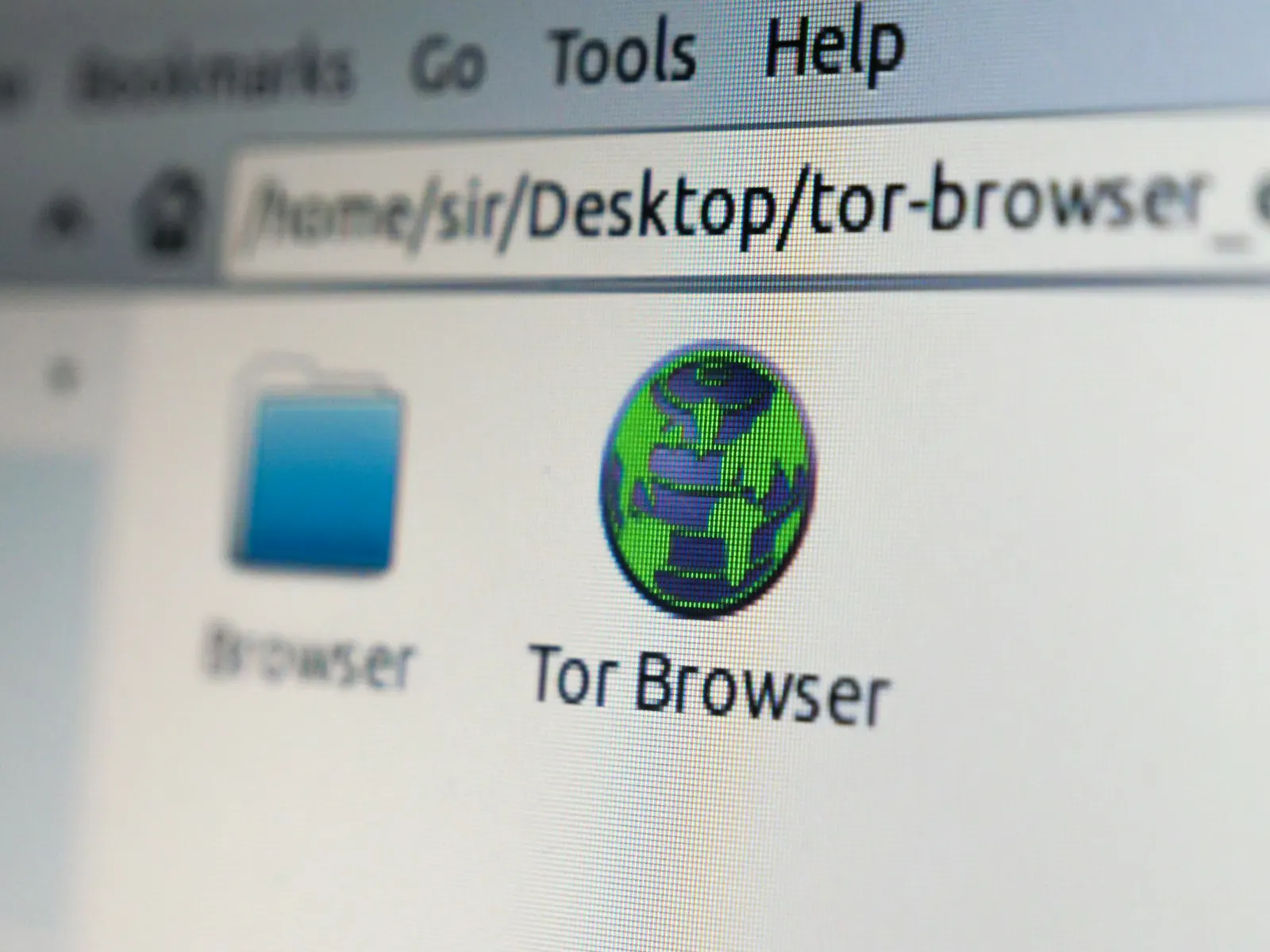
Tor is moving its relay encryption from the aging "tor1" algorithm to Counter Galois Onion (CGO), and the change is a fascinating piece of engineering.
Here is exactly what is changing and why you should be excited about it, or at least feel a little safer.
The old protocol dates back to around 2002. Its developers only recently gave it a name, "tor1," mostly so they would have something to call it in the documentation while retiring it. It was built on the AES-128-CTR stream cipher.
Its core weakness was the malleability of the stream cipher. In counter (CTR) mode, the ciphertext ($C$) is produced by XORing the keystream ($S$) with the plaintext ($P$), so $C = S \oplus P$. That is grade-school math, and it was a fatal blow to anonymity:
To make matters worse, users often mistook the side effects of these attacks (dropped connections) for DDoS attacks, which produced false alarms in Tor client logs.
The new standard, Counter Galois Onion (CGO), is based on the UIV+ construction and the concept of a Rugged Pseudorandom Permutation (RPRP). Instead of a simple stream cipher, it uses a wide-block cipher design that resists malleability.
How does this work in practice?
Update function every time a cell is sent or received. If someone steals a key five minutes into a connection, they cannot decrypt what happened in minute four.This is probably the biggest surprise. Usually "more secure" means "slower," but here there is an interesting exception. The old protocol used SHA-1 for integrity checks, and SHA-1 is slow. CGO eliminates that overhead.
Benchmarks (run on Intel Cascade Lake processors) show the following:
The developers say this is no cause for concern. The gains at the edges of the network matter more, and modern processors with AES-NI and PCLMUL instructions (used to optimize CGO) can absorb the extra load on middle relays.

CGO is already implemented in Arti (the Tor client written in Rust) and in the classic C implementation. The next steps are enabling CGO by default in Arti and adding CGO negotiation for onion services.
This is a fascinating moment: we are watching academic cryptography (research by Degabriele, Melloni, Münch and Stam) actually fix the internet.
Read more: Why a VPN Isn't Enough, our in-depth analysis of online anonymity, where we cover the strengths and limitations of the Tor network in the context of today's threats.
Aleksander
Sources:
Read more
Signal vs WhatsApp vs Telegram: which messenger truly protects your privacy? Encryption, metadata and backups compared, plus a step-by-step PGP guide.
Encryption isn't enough. AI-driven traffic analysis, website fingerprinting and smart networks can unmask VPN and Tor users. Here's what protects you.
Your firewall is no longer enough. Learn why Zero Trust's "never trust, always verify" is becoming the legal and technical standard under NIS2 and DORA.
A free consultation with one of our experts — no obligation, in full confidence.
Let's talkWe'd like to use Google Analytics cookies to see how many people visit the site and which content is useful. We'll only set them if you agree. You can change your decision at any time via the “Cookie settings” link in the footer. Cookies Policy