
AI-Powered Cyberattacks in 2025: Key Takeaways from the ENISA and OpenAI Reports
How AI is fueling phishing, malware and disinformation in 2025, and helping defenders fight back. Key takeaways from the latest ENISA and OpenAI reports.
Analysis
Over 600,000 incident reports. We break down NASK and police data on deadly TikTok challenges, Roblox scams, and Poland's sexting legal trap.
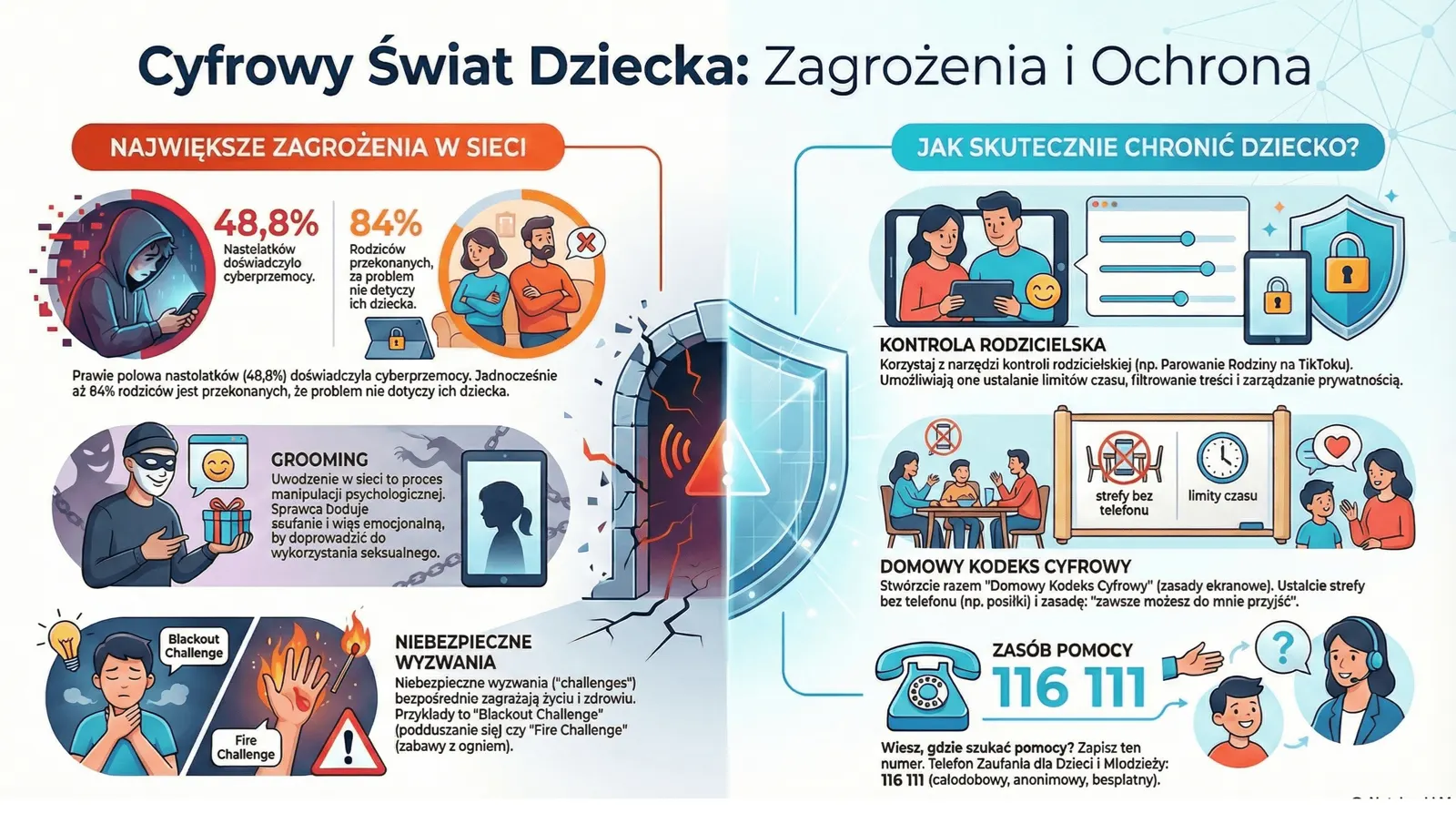
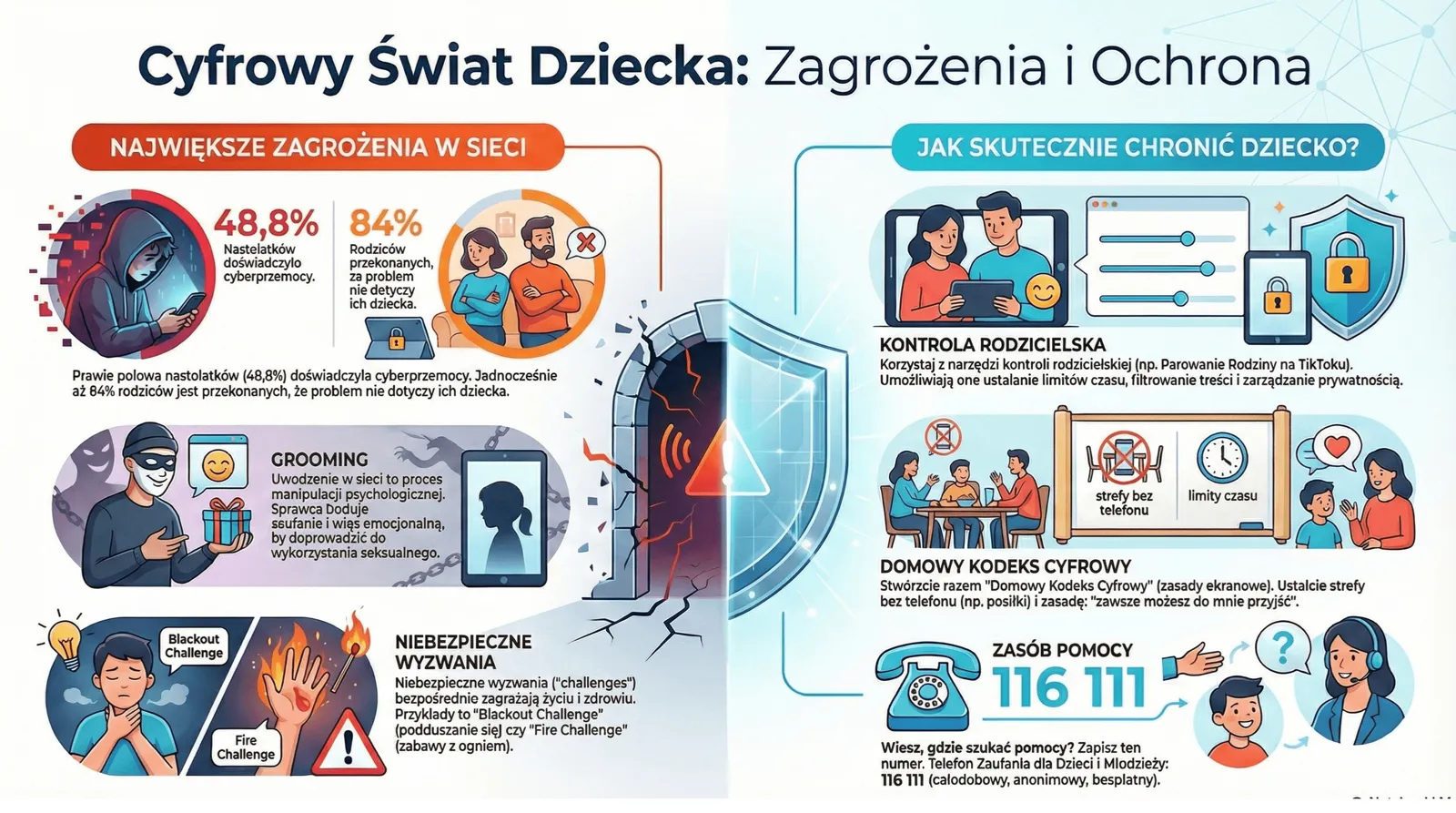
As the editor of a cybersecurity section, I spend my days covering data breaches at large corporations, ransomware attacks on hospitals, and vulnerabilities in banking software. But as 2025 draws to a close, we have to face the facts: the real front line of digital security has moved out of the server room and into our children's pockets.
The data coming in from CERT Polska, NASK (Poland's National Research Institute), and the Office of the Ombudsman for Children's Rights is harsh and leaves no room for illusions. In 2024 alone, the number of security incidents grew at a record pace, passing 600,000 reports. This is not a statistical blip. It is a fundamental shift in the threat landscape. We are seeing more than a rise in volume. Above all, the threats are changing in kind, moving toward sophisticated social engineering and the use of artificial intelligence.
In this article, drawing on hard data from law enforcement and trusted public institutions, I break down the reality that Generation Alpha and Generation Z face today.
Before we get to specific threats, we need to understand the environment in which they take root. Forget the picture of a child sitting at the family computer in the living room, where a parent could discreetly glance over their shoulder. That era is gone for good.
According to the latest research, 93% of teenagers go online mainly through their phones. The smartphone has become the undisputed center of digital life, pushing tablets and computers to the sidelines. The most striking data, however, concern the age at which it starts: as many as 4 in 10 children get their own smartphone with unlimited internet access before their 9th birthday. Among 7th and 8th graders, the figure is 45%.
What does this mean in practice?
2025 is the year AI arrived in schools and homes in force. 70% of teenagers have already used generative AI tools, and for more than half of them, ChatGPT has become their main source of information, displacing Google and Wikipedia.
AI has real educational potential (48% of students use it for learning), but it also brings new and subtle threats:
Related topic: Autonomous AI agents as hackers - An analysis of how artificial intelligence can be used offensively in cybercrime.
Our editorial team analyzed reports submitted to incident response teams. Here is the threat map for 2025:
This is one of the most dangerous crimes, and parents often mistake it for "just chatting." Grooming is the process of luring a child, carefully paced over time. Criminologists identify a recurring series of stages:
This phenomenon is a distinctive feature of the Polish internet, and it shows no sign of fading. Patostreaming refers to live broadcasts of deviant behavior: drinking binges, domestic violence, and destruction of property. The worst part is the business model. Viewers (often children) send money ("donations") to get a sense of control: they can "order" someone to be hit or a drink to be chugged in one go. For young viewers, this is a form of interactive entertainment that leads to complete desensitization to human suffering.
TikTok and viral trends are not just harmless dance routines. A teenager's brain, with a prefrontal cortex that is still developing, does not rein in impulses effectively, while the reward system craves likes. That explains the popularity of challenges that directly threaten lives:
Children are increasingly targets of financially motivated attacks. In games such as Roblox and Fortnite, in-game currency (Robux) and skins are status symbols. Criminals phish for passwords by promising free top-ups. Resale platforms (Vinted, OLX) are just as dangerous: teenagers selling clothes fall victim to phishing and hand over their parents' card details.
This is a taboo subject that needs to be discussed openly. Sexting (sending intimate photos) has become part of how young people date today. But the law has not kept up with social norms, and the consequences can be dramatic.
Under Polish law (Article 202 § 4 of the Criminal Code, KK), recording pornographic content involving a minor is a crime. The law makes no distinction based on intent. The result is a paradox: a teenager who has a nude photo of his girlfriend (also a minor) on his phone, sent to him voluntarily, can be prosecuted under the same provision as a pedophile producing child sexual abuse material. Revenge porn is especially cruel: using such photos as a tool for revenge after a breakup, which stigmatizes the victim and leads to personal tragedies.
Knowing is one thing. Acting is another. We are not helpless. Protecting children takes a combination of hard technical barriers and soft skills.
Technology should be the first line of defense. Here is what you need to set up right away:
No filter can replace a conversation.
For parents: A short guide to communication privacy - Learn the rules of safe online communication, and teach them to your kids.
If the worst happens, don't handle it alone. Poland has a network of professional support services:
Looking at the 2025 threat landscape, one thing is clear: keeping children safe online is an ongoing process, not a one-time action. The threats will keep evolving. Yesterday it was a virus. Today it is the TikTok algorithm and a fake AI friend. As adults, we need to act as wise guides. The most effective "antivirus" is still a strong relationship with a parent. Be there.
Aleksander
Read more
How AI is fueling phishing, malware and disinformation in 2025, and helping defenders fight back. Key takeaways from the latest ENISA and OpenAI reports.
Is AI eroding our ability to think, write and read deeply? Derek Thompson's warning about the quiet decline of human thinking in the age of ChatGPT.
Poland's cyber defense has two faces: the new cyber.gov.pl portal with free tools for citizens, and openly acknowledged offensive cyberweapons.
A free consultation with one of our experts — no obligation, in full confidence.
Let's talkWe'd like to use Google Analytics cookies to see how many people visit the site and which content is useful. We'll only set them if you agree. You can change your decision at any time via the “Cookie settings” link in the footer. Cookies Policy